Closing the Loop: How Welsh Groups Can Leave a Funded Project Well
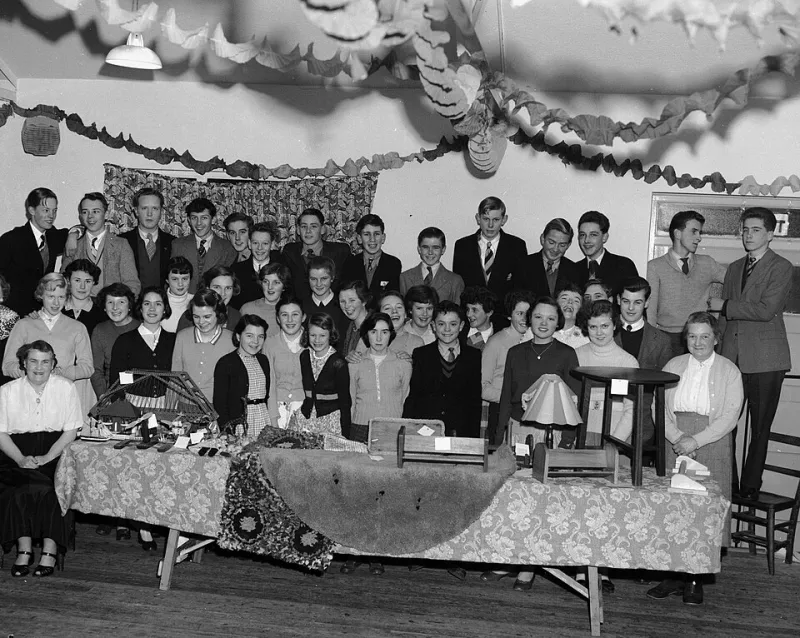
Photo: Geoff Charles, CC BY-SA 4.0, via Wikimedia Commons
Three-year funded projects rarely end on the day the final payment arrives. They end in storerooms, inboxes and kitchen-table conversations: a lease that needs renewing, a laptop that nobody is sure belongs to the group, a volunteer who has been holding the project together and is now exhausted. For trustees and coordinators across Wales, the closing months of a grant are not an administrative afterthought. They are part of the project itself.
The ending is part of the project
Funding agreements tend to be written with clarity about what will happen during the grant period and much less clarity about what happens afterwards. That is understandable: funders want to support delivery, and delivery is urgent. But a community organisation that has not planned its exit is exposed to avoidable risk. Unspent money may have to be returned. Equipment may need to be disposed of or transferred. Staff may be facing redundancy. Beneficiaries may discover that a service they rely on is disappearing only weeks before it closes.
In 2026, with many Welsh groups managing tighter budgets and shorter funding horizons, the exit deserves the same attention as the application. A good ending does not mean the project has failed. It means the organisation has understood the difference between a funded activity and a lasting community asset.
Read the agreement before the final year
The most useful exit planning starts long before the final report. Trustees should revisit the grant agreement at least twelve months before the end date and identify the clauses that govern closure. These commonly include winding-up or termination provisions, rules on unspent balances, arrangements for assets purchased with grant funds, and requirements for final monitoring or evaluation. Some agreements also set out what happens to intellectual property, data or branded materials.
It is worth asking a simple question: if the project stopped tomorrow, what would the funder expect us to do? If the answer is not clear from the paperwork, ask the funding officer. A written note of the answer should go into the trustee minutes. This is not bureaucracy for its own sake; it is how a voluntary committee protects itself and the people it serves.
Reserves, balances and the question of surplus
Unspent grant money is one of the most common sources of tension at project closure. Some funders allow a proportion to be retained for related purposes; others require repayment. The difference often depends on the wording of the agreement and on whether the money was allocated for a specific activity that did not take place.
A reserves policy helps here. It need not be elaborate. It should state what the organisation would do with a modest surplus, who can authorise expenditure in the final months, and how restricted and unrestricted funds are kept separate. For small groups, a short policy approved by trustees is usually sufficient. The point is to avoid a last-minute scramble in which a coordinator has to make decisions that properly belong with the board.
Equipment, leases and intellectual property
The question of ownership arrives with particular force when a grant has paid for physical assets. A minibus, a laptop, a community fridge, a polytunnel or a set of musical instruments may have been bought for the project, but the project is not a legal person. The trustees need to know whether the asset belongs to the charity, the funder or a partner organisation, and what the funder requires when the grant ends.
Where a lease is involved, the timing matters even more. A project based in a village hall or rented workshop may have no automatic right to remain once funding for the post that ran it disappears. Trustees should review the lease, insurance and maintenance responsibilities before the final year, not after the staff team has dispersed.
Handover that a successor can actually use
Not every project should continue, and not every ending needs a successor. But where there is local appetite to keep something going, handover documentation is essential. A useful handover pack is not a vanity report. It includes contact lists, supplier details, passwords and account access, safeguarding and health and safety records, a simple asset register, evaluation findings and a plain account of what worked and what did not.
If another group is taking on the work, the transfer should be agreed in writing. That may mean a small asset transfer agreement, a memorandum of understanding or a letter confirming responsibility for insurance and safeguarding. For larger assets, trustees should take advice before agreeing to any transfer. The Charity Commission for England and Wales publishes guidance that is relevant to Welsh charities, and county voluntary councils can help smaller groups interpret it.
Conversations with the people who use the service
Perhaps the hardest part of closure is the conversation with beneficiaries. People who have built relationships with a project worker, a lunch club or a support group deserve honest and timely communication. A letter three weeks before closure is rarely enough. Where possible, service users should hear from the organisation early enough to make alternative arrangements, ask questions and contribute to any successor plan.
This is also where a project can protect its reputation. A well-handled ending leaves goodwill in the community. A poorly handled one can damage trust in the organisation and in future funding bids.
Volunteer fatigue is a funding issue
Closure places a heavy burden on the volunteers who have kept the project running. They may be asked to write final reports, organise handovers, support staff through redundancy and explain decisions to the community, often while doing their own paid work. Trustees should acknowledge this openly and build time and support into the final months. A short debrief, expenses for travel to closing meetings and a clear division of tasks can make the difference between a dignified ending and a quiet collapse.
Why funders should score the exit
Funders increasingly ask applicants to describe sustainability. They should also ask how the project will end. An exit plan is not an admission of failure; it is evidence of mature governance. It shows that trustees understand their responsibilities, that beneficiaries are not an afterthought and that public money will be accounted for properly.
In 2026, Welsh community groups should be able to say to funders: we planned the beginning, we delivered the work and we closed it well. That is a quality marker worth recognising.