Words That Open Doors: Rethinking How Welsh Funding Describes Communities

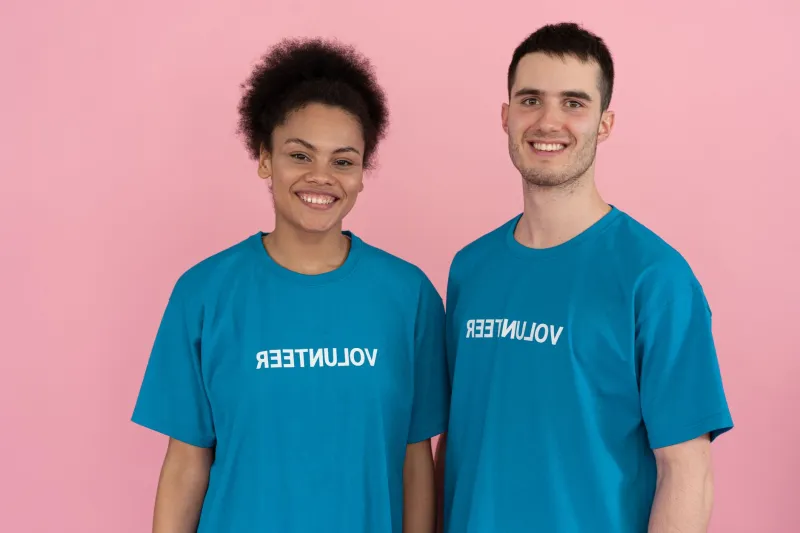
Photo: Welsh rural community group volunteers meeting village hall, via c8.alamy.com
There is a phrase that appears so often in Welsh funding documents that it has become almost invisible. It turns up in application forms, monitoring reports and strategy papers. It is used to describe communities that do not apply for money, do not attend consultation events and do not appear in the usual data sets. The phrase is 'hard-to-reach'. It sounds practical. It sounds neutral. It is neither.
A phrase that travels
Language in funding is not decorative. It shapes how problems are understood, which solutions seem sensible and who is expected to do the work. When a community is described as hard-to-reach, the implied direction of travel is from the funder to the community. The funder is the fixed point; the community is the thing that must be reached. The phrase quietly places the difficulty with the people who are not applying, not with the system that is asking them to apply.
That matters in Wales, where the funding landscape is broad but not always easy to navigate. A small village hall committee in Ceredigion, a Welsh-language parent and toddler group in Gwynedd or a volunteer-run sports club in the south Wales valleys may have very different reasons for not seeking grant funding. Some may not know what is available. Some may assume they are not eligible. Some may have looked at an application form and concluded that the process was designed for organisations with paid staff. Calling all of them hard-to-reach tells us nothing useful about which of those things is true.
Who is the phrase for?
In practice, the phrase often serves the funding system more than the community. It provides a shorthand explanation for low application rates and unrepresentative grant portfolios. It allows a programme to say that it tried to reach everyone, while leaving the underlying barriers — complexity, timing, reporting burdens, travel, language and trust — largely intact.
That is not to suggest that funders are acting in bad faith. Most are genuinely trying to widen participation. But good intentions do not make a phrase accurate. If a group has never heard of a fund, it has not been hard to reach; the fund has been hard to find. If a group has read the guidance and decided not to apply because the paperwork is disproportionate to the grant, it has not been hard to reach; the process has been hard to use. If a group has been put off by a previous experience of reporting, it has not been hard to reach; it has been hard to persuade.
Deprivation data and the groups it misses
A related habit is the use of deprivation framing as the primary way of describing need. Deprivation data is valuable. It helps funders direct resources towards areas where poverty and disadvantage are concentrated. But it can also become a filter that makes some communities visible and others invisible.
Rural need is often dispersed. A few households in a wide area may be experiencing isolation, poor transport or low incomes, but the numbers may not aggregate into a neat priority ward. Welsh-language communities can face specific pressures — from outward migration of young people to the fragility of local institutions — that are not captured by standard deprivation measures. A small group may be doing essential work with older people, disabled residents or families on low incomes without describing itself as a deprivation project at all.
When funding language becomes too tightly tied to a single framing, groups that do not fit the template can conclude that the money is not for them. That is a loss both to the community and to the funder.
Opting out is not the same as being excluded
It is tempting to assume that groups missing from funding data have been excluded. Sometimes they have. But in many cases they have opted out. They have made a rational judgment that the application process is too long, the reporting too heavy, the timescale too short or the likelihood of success too low to justify the effort.
This distinction matters because the remedies are different. If a group is excluded, the answer is to remove barriers. If a group opts out, the answer is to earn its trust and reduce the cost of applying. In practice, most funding programmes need to do both. A simpler form is helpful, but it will not by itself persuade a volunteer treasurer who has been burned by a late payment or an unclear monitoring requirement.
What to say instead
If 'hard-to-reach' is doing inaccurate work, what should replace it? There is no single perfect phrase, but there are better ones. Funders and applicants could speak about 'communities facing barriers to funding', 'groups with lower application rates', 'communities underserved by current programmes' or 'organisations that are less engaged with formal funding'.
Each of these phrases points towards a different question. Barriers to funding invite us to examine the form, the deadline and the evidence requirements. Lower application rates invite us to look at outreach and awareness. Underserved communities invite us to ask what has been missing from previous programmes. Less engaged organisations invite us to consider trust and relationships. None of them places the problem solely with the people who are not in the room.
Outreach that matches the language
Changing words without changing practice would be empty. In 2026, funders and community organisations could test a few practical commitments. Publish clear, short guidance in Welsh and English. Offer application support by phone as well as online. Provide small, flexible grants with proportionate reporting. Pay attention to timing, so that deadlines do not collide with school holidays, harvest, lambing or the busiest periods for volunteer-run services. Work through trusted local intermediaries — county voluntary councils, community councils, faith groups, Welsh-language networks and existing clubs — rather than relying only on central communications.
Community organisations can also change their own language. Trustees can describe their work in plain terms rather than mimicking funder jargon. They can say what they do, who benefits and what would happen without them, without claiming to be harder to reach than they are.
A test for 2026
A useful test for any funding programme is whether its language would make sense to a volunteer treasurer in a small Welsh village. If the answer is no, the problem is not the treasurer. It is the programme.
'Hard-to-reach' is not a neutral description. It is a judgement dressed as a fact. Welsh funding in 2026 would be better served by language that names the barrier accurately, shares responsibility for it and points towards a practical response. Communities are not hard to reach when the door is open, the instructions are clear and someone is willing to answer the phone.