Costing the Cymraeg: Making Welsh Language Delivery Visible in Grant Budgets
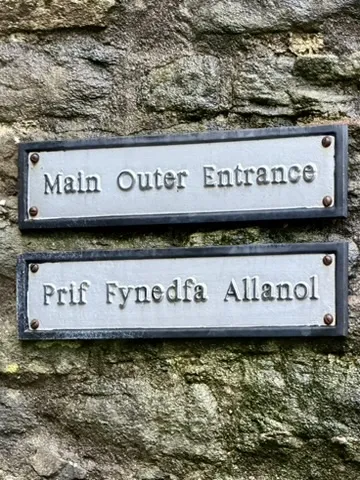
Photo: Sartma, CC BY 4.0, via Wikimedia Commons
In many grant applications, the Welsh language appears late: a sentence in the equality section, a promise to translate the leaflet, an intention to add Welsh to the website. It reads as a courtesy. It is rarely costed. The result is predictable: when budgets tighten, translation slips, bilingual outreach is dropped, and monitoring cannot show what was promised. For Welsh community organisations, that is both a delivery gap and a funding risk.
A more robust approach is to treat Welsh-language provision as part of the project design. It need not mean bilingual everything. It means deciding what the project will do, why, and what it costs, then presenting that clearly.
Begin with the activity, not the translation
Groups often start with documents. Better to start with people and activities. Who is the project for? Will Welsh speakers be recruited, supported or consulted? Will events be delivered in Welsh, bilingually, or with interpretation? Will staff need to answer queries in Welsh? Once those questions are answered, the cost follows.
A community transport project, for example, might need bilingual booking, Welsh-speaking drivers at certain times, and bilingual route information. A food project might need Welsh-medium volunteer recruitment and bilingual labels. A heritage project might need bilingual exhibition text and Welsh-language school workshops. Different activities produce different cost lines.
Four budget lines groups overlook
Translation and proofreading. Budget for professional translation, not only machine output. Include proofreading and layout. Short documents may cost little; exhibitions, legal notices and accessible formats cost more.
Bilingual design and print. Welsh text is often longer. Allow for layout, design time and print. Bilingual signage may require specialist fabrication. Ask for quotes early.
Staff and volunteer time. Welsh-medium outreach takes time: drafting bilingual social posts, contacting Welsh-medium networks, preparing Welsh-language sessions and supporting Welsh-speaking participants. This is a real cost even when no invoice arrives.
Monitoring and evaluation. If you promise bilingual surveys, interviews or reports, budget for translation, analysis and write-up. Otherwise the evidence will be thin.
Staff time is a language cost
One of the most common omissions is staff time. A grant may fund a part-time coordinator but not the hours needed to deliver bilingually. Those hours do not disappear; they are absorbed by someone already stretched, or the commitment falters.
Where possible, show language-related staff time as a named percentage or number of hours. For example: 0.1 FTE for bilingual engagement, or 40 hours across the year for Welsh-medium outreach and translation coordination. This is not double-counting if the tasks are distinct. It makes the delivery model visible.
Volunteers also need support. Bilingual volunteers may need training, supervision and materials. Their time can be presented as match funding where appropriate, but only if the group can evidence it.
Specify signage and materials honestly
Bilingual signage is a frequent source of budget surprises. A simple plaque may be straightforward; external signs, listed-building consent, accessible formats and installation can add cost. Obtain quotes and state assumptions. If the project will phase signage, say so and cost the first phase.
Printed materials raise similar questions. Not every leaflet needs equal bilingual content at every stage. But if Welsh is promised, it should appear in the budget and timetable. A useful test: could a Welsh-speaking participant take part fully using the materials you have costed? If not, the gap needs explaining.
Make monitoring proportionate
Funders want to know what difference was made. For Welsh-language elements, keep indicators simple and tied to activity. Examples include: number of bilingual materials produced and distributed; number of Welsh-medium sessions held; number of participants engaged through Welsh-medium outreach; staff hours delivered bilingually; participant feedback collected in Welsh.
Avoid inventing complex language audits unless the project genuinely requires them. A short table in the monitoring plan is usually enough. If you commission translation, keep invoices. If staff deliver Welsh-medium outreach, keep a simple log. Evidence should be routine, not a separate bureaucracy.
Avoid the nice-extra trap
Welsh language provision is sometimes framed as an enhancement, valuable but optional. That framing makes it vulnerable. A stronger case links language to the project's purpose: reaching eligible participants, removing barriers, meeting statutory duties where they apply, and sustaining community support.
At the same time, proportionality matters. A small grant for a one-off event may need a modest bilingual plan, not a full translation strategy. The application should explain the choice. A sentence such as 'We will provide bilingual publicity and a Welsh-language welcome at the event; translation of the full report is not required for this activity' is clearer than an unfunded promise.
A simple budgeting sequence
- List project activities.
- Mark where Welsh-language access is needed.
- Identify the cost type: translation, design, staff time, interpretation, training or monitoring.
- Obtain unit costs or quotes.
- Add the lines to the budget with clear descriptions.
- Match each line to an outcome or monitoring indicator.
- Check the timetable: translation and design take time.
- State what is not included and why.
This sequence keeps the application readable. Funders do not need a separate essay on language; they need a coherent plan.
Conclusion
A bilingual bid is not simply a bid with more translation. It is a bid that has thought through who will take part and what it will take to include them. For Welsh community groups, that is practical, fundable and fair. Costing the Cymraeg makes the commitment visible, and far more likely to survive contact with delivery.